Showing posts with label history of science. Show all posts

Tuesday, 12 April 2011

12th April 2011 Links between Science & Arts

In many instances, art has influenced science. Many inventors have artistic training. The majority of Nobel laureates are active in some sort of artistic expression as adults such as singing, dancing, woodwork, writing poetry or literature, and so on.

Here are some examples of the influence art has had on science.

Cell phone encryption

This is based on frequency hopping which was invented by the composer George Antheil in collaboration with the actress Hedy Lamarr.

TV & Computer Screens

Georges Seurat - La Parade (1889) - detail showing pointillism technique
The combination of red, blue and green dots was an innovation by a collaboration of a series of painter-scientists (e.g., American physicist Ogden Rood and German Nobel laureate Wilhelm Ostwald) and post-impressionist artists such as Seurat.

Programmable Devices & Digital Images

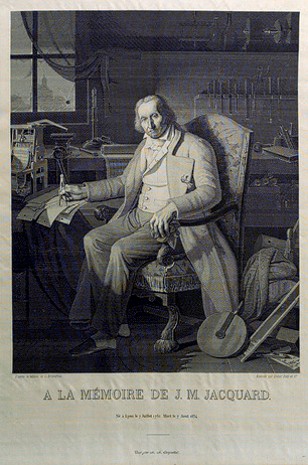
Woven silk portrait of Joseph Marie Jacquard, based on a painting of Jacquard by Claude Bonnefond (1796–1860); woven by Michel-Marie Carquillat (1803–1884)
The first programmable device was invented by Joseph Marie Jacquard to control the looms that made his tapestries. Babbage, who owned a portrait of Jacquard woven in silk and requiring 24000 punch cards to produce, was inspired to use the same technique in his analytical engine.

Jacquard also made the first digital images out of black and white threads.

Computer Chips

Computer chips are made using three art techniques: etching, silk screen printing, and photolithography.

Satellite Images

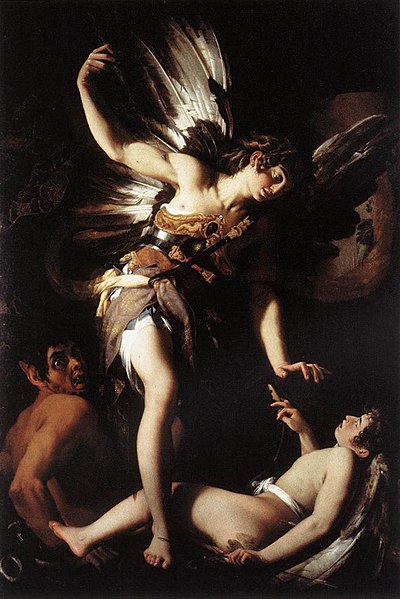
Giovanni Baglione, 1602, Amor sacro e amor profano (chiaroscuro)
Data from NASA and NSA satellites is enhanced using artistic techniques such as chiaroscuro (strong contrast between light and dark) and false coloring (the Fauvists - using colours other than those which are seen naturally) so important information is more easily seen.

Camouflage

A photograph of two model ducks, one countershaded and the other camouflaged 
Camouflage was invented by an American painter, Abbot Thayer. He wrote a book called 'Concealing Coloration in the Animal Kingdom: An Exposition of the Laws of Disguise Through Color and Pattern; Being a Summary of Abbott H. Thayer’s Disclosures' which was published by Macmillan in 1909 and reissued in 1918. It influenced the use of camouflage in World War I.

Suturing

When the French President, Sadi Carnot, was attacked with a knife, his large abdominal veins were severed. Surgeons of the day concerned they were too large to be reconnected.  Following this Alexis Carrel set about working out how to suture blood vessels.  In order to do this, he took lessons from embroiders and a lace maker. He came up with a method called triangulation, for which he became a Nobel laureate.

Pacemaker

A pacemaker is a modification of a musical metronome.  (Couldn't find any more info on this.)

Notation

A system of notation developed by a dance theorist, Noa Eshkol and architecture professor, Avraham Wachman is used in dance, physical therapy, animal behaviour and early diagnosis of autism.

Stent

Through origami, insights have brought forward technological advances involved in car airbag deployment and stent implants.

Bridge

Bridges are often designed by artistically trained engineers.

Artists

Often inventors are artistically trained.

Samuel Morse

The Chapel of the Virgin at Subiaco - Samuel Finley Breese Morse
Samuel Morse, a prominent artist, invented the telegraph.  When he was painting a portrait of Gilbert du Motier, his wife was taken ill.  By the time Morse received notice of this and rushed home, she was already dead. Because of this, he moved on from painting to developing a means of long distance communication.

Robert Fulton

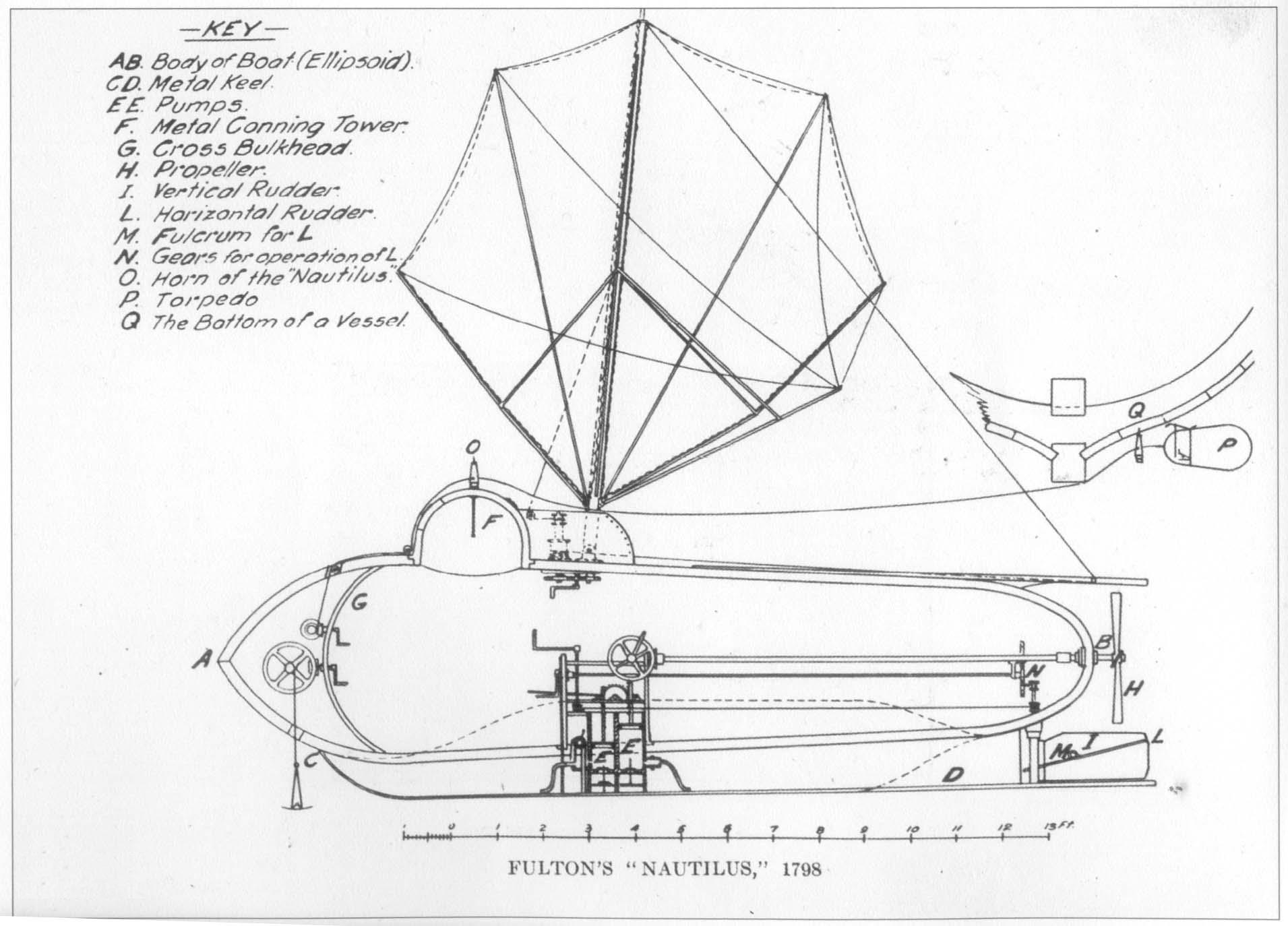
Fulton Nautilus submarine. 19th century drawing
Robert Fulton, who invented the steam ship, was also a prominent artist.

Alexander Graham Bell

Alexander Graham Bell, from his knowledge of sound and understanding of music, conjectured that it would be possible to transmit multiple messages over the same wire at the same time, if they were at different pitches.  This idea led to the invention of the telephone. 

Buckminster Fuller

Buckminster Fuller's geodesic domes led to the invention of a new kind of chemical nanoparticle called Buckminsterfullerene or buckyball. They also aid understanding of cell and virus structure which  permits new biomedical insights, and thus the creation of new medicines.

Kenneth Snelson

Kenneth Snelson is an artist who works with physical forces in 3D. His work on tensegrity has applications in biology.

Art of Science Learning Blog
Bioephemera

Tuesday, 5 April 2011

5th April 2011 Linking up Nature with Electricity

Electricity

1784 Charles-Augustin de Coulomb quantified the force between electrical charges, discovering the inverse square law that is now known as Coulomb’s law.

Electricity and Nature

1750s Benjamin Franklin postulated and demonstrated that lightning is a form of electricity with his invention of the lightning rod and a particularly infamous kite flight.

1791 Luigi Galvani discovered that the muscles of dead frogs could be excited by electrical sparks.

Electricity and Chemistry

1800 Italian physicist Alessandro Volta developed the first chemical battery, known as the voltaic pile.

Electricity and Magnetism

1820 Danish physicist Hans Christian Oersted observed the twitch of a compass needle in the presence of an electric current which was an experiment he performed for the first time in a lecture!

Benjamin Franklin had magnetised needles by discharging electricity through them
Sailors reported the reversal of polarity of compass needles after their ships were struck by lightning.

1831 Michael Faraday showed that a changing magnetic field could produce an electric field.

James Clerk Maxwell completed the fundamental theory of electromagnetism, and the realised that light is an electromagnetic wave.

Electromagnetism

If a compass is put to the east or west of a north pointing wire (with current flowing south to north), it will point to the NW. When above, it will also point NW, but when below, it points NE. Why is this? It's is because the magnetic field spirals around the wire according to the right hand rule. The angle of this deviation is affected by the size of the current. The angle would be larger if it were not for the effect of the earth's magnetic field. This works in the same way as the field around the wire, if you imagine a wire stretching from the South Pole to North.

[Source: The Birth of Electromagnetism-1820]

Monday, 4 April 2011

4th April 2011 The Discovery as Radiation as a Cancer Treatment

Since I read the an article a few days ago on the Radiation Girls, I've been wondering how on earth anyone thought of using radiation to treat cancer.  Well today my luck was in as  Orac mentioned it in his blog.

A young man by the name of Emile Grubbe was so impressed by Roentgen's discovery of x-rays that he began to experiment himself. He began to suffer from radiation dermatitis of his hands and neck.  He linked these lesions to the radiation.  One of his colleagues suggested he try to use them to treat carcinoma, which he did with almost immediate success. In February of 1896, he founded the first radiation therapy facility in Chicago.

Wednesday, 30 March 2011

30th March 2011 - Radium

Today I finished reading a series of articles on Radium and the Radium Girls.

Radium was hailed as a wonder element, with radium sweets, tonics and so on being produced. It was found within a couple of years of its discovery that it could be used to shrink cancer tumours.  What I'd like to know is how they managed to spot that radiation shrinks tumours, or rather why they would be treating people with it in order to see this.
According to the ACS, the discovery of radiation in 1896 by Wilhelm Conrad Roentgen was a huge advancement in cancer therapy. Within months of the discovery, X-rays were being used for diagnosis, and within three years, radiation was used in cancer treatment. According to the ACS, radiation therapy began with radium and low-voltage diagnostic machines. French doctors discovered that daily doses of radiation over several weeks would greatly improve therapy results. In the early 20th century, radium was being used in small tubes for insertion directly into tumors or body cavities containing cancer, which allowed for treatments of inoperable areas, like the cervix and larynx, according to the American Society of Radiation Oncology. [Source: The History of Cancer Therapy]

The Radium Girls were women who worked in a factory painting watch dials with Radium.  They suffered horrible disfigurements and ultimately death from radiation poisoning.  Radium acts like calcium in the body, and is used by the body in place of calcium.  Instead of making bones strong, it shoots them with alpha particles, causing holes so that the bones become brittle and break.

Part 1: The Radium Girls
Part 2: Life in the Undark
Part 3: A Dazzle in the Bones